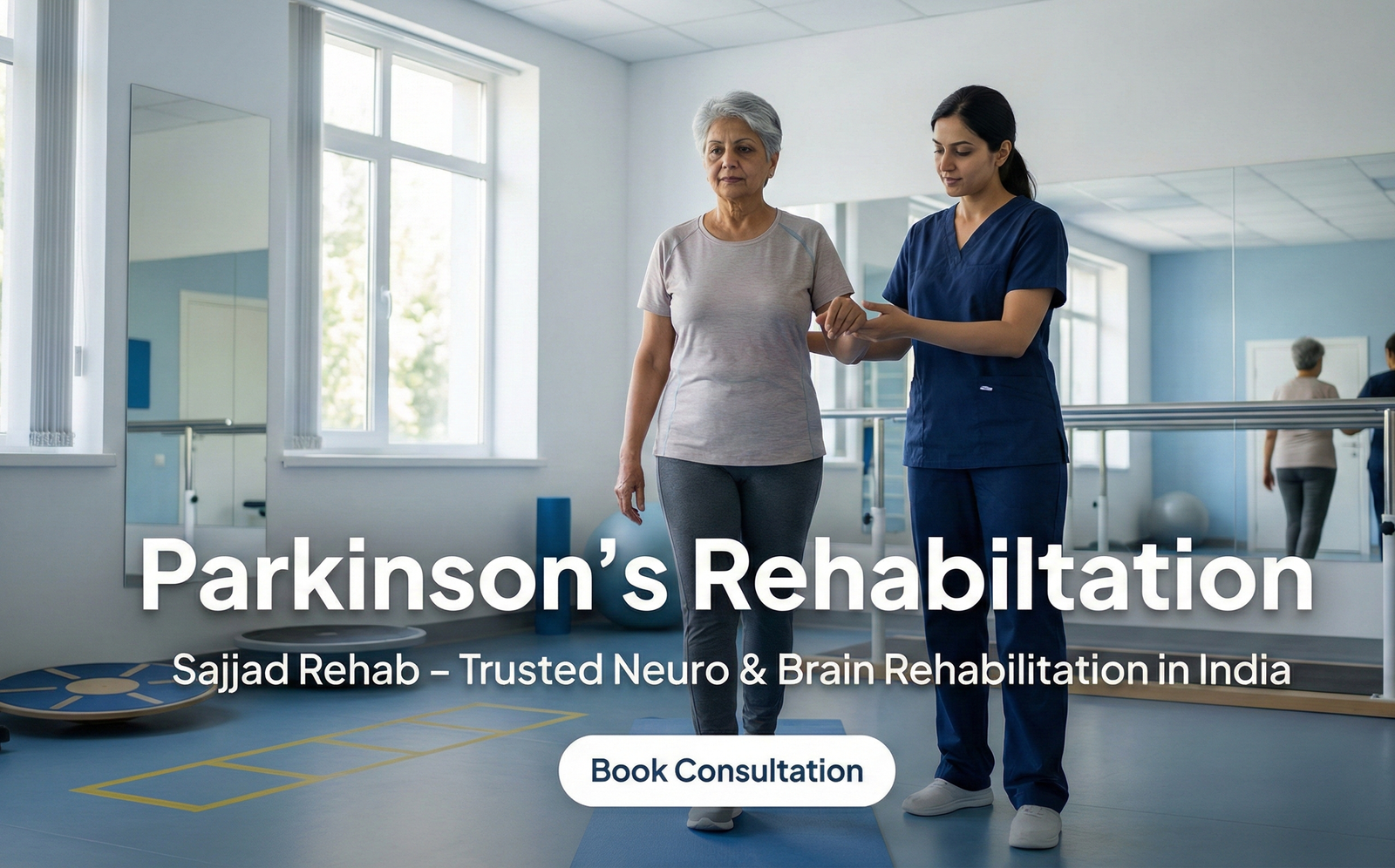
Managing a progressive condition requires a structured, evidence-based approach. We help patients maintain mobility, improve balance, and enhance their quality of life through specialized Parkinson’s disease rehabilitation.
Involuntary shaking and muscle stiffness that can make simple movements difficult and painful.
Slowness of movement, which can affect everything from walking to performing fine motor tasks.
Difficulty maintaining balance, which significantly increases the risk of falls and injuries.
A temporary, involuntary inability to move, often described as feeling like one's feet are "glued to the floor."
Increased reliance on family members for personal care and mobility as the condition progresses.
Coping with the progressive nature of the disease can lead to anxiety, frustration, and social withdrawal.
Parkinson’s disease is a progressive neurological disorder that primarily affects movement. It occurs when dopamine-producing neurons in the brain are affected, leading to symptoms that impact daily activities. Parkinson’s disease rehabilitation is a critical component of long-term management, focusing on physical strategies to counteract the effects of the condition.
At Sajjad Rehabilitation & Therapy Centre, we provide a supportive environment where patients learn to manage their symptoms and maintain their functional independence for as long as possible.
While Parkinson’s is a progressive condition, the brain possesses neuroplasticity—the ability to adapt and form new pathways. Rehabilitation utilizes this to help patients "retrain" their movement patterns.
Guided therapy is essential because it provides specific sensory cues and exercises that help bypass the affected areas of the brain. Our focus is on functional improvement, ensuring that every exercise translates into a safer and more independent daily life.
Starting rehabilitation early—often at the time of diagnosis—is highly beneficial. It helps establish a baseline of physical health, maintains joint flexibility, and teaches safety strategies before significant mobility issues arise. Early intervention is key to slowing the functional decline associated with the disease.
Detailed evaluation of gait, balance, muscle rigidity, and functional limitations.
Setting realistic goals to improve mobility and reduce fall risks.
Gradual introduction of complex movements and balance challenges.
Continuous supervision to ensure all exercises are performed safely and effectively.
We utilize evidence-based methods specifically designed for neurological recovery:
Rehabilitation is most effective when supported at home. We provide guidance to family members on:
It is important to understand that Parkinson’s is a long-term condition. Recovery in this context means managing symptoms and maintaining function. Progress varies significantly depending on the stage of the disease and individual response to therapy.
Our goal: To help every patient achieve their maximum possible potential for independence and a better quality of life through consistent, professional support.
Get a professional evaluation and a personalized rehabilitation plan.
Learn about our neuro rehabilitation program for progressive neurological conditions.
Rehabilitation should be considered if you notice a change in walking patterns, increased stiffness, frequent loss of balance, or difficulty performing daily tasks. Early intervention provides the best foundation for long-term management.
Yes, rehabilitation can still be very useful in Parkinson's disease. It helps maintain mobility, improve balance, reduce falls risk, and support daily function even though the condition may progress over time.
Rehabilitation often helps gait changes, slowness of movement, posture problems, balance difficulty, freezing episodes, reduced flexibility, and difficulty with daily activities. Speech or swallowing therapy may also help some patients.
Rehabilitation can be helpful even in the early stages, especially when walking, posture, hand use, or balance start changing. Starting before severe disability develops can help patients stay active and safer for longer.
The exact schedule depends on symptoms and stamina, but regular movement practice is important. Many patients benefit from supervised therapy sessions plus a daily home exercise routine designed around safe movement and balance.
Yes, therapy may help through cueing strategies, balance training, turning practice, and step initiation exercises. It may not remove freezing completely, but it can reduce risk and improve safety.
Exercise is usually safe when it is tailored to the person's balance, endurance, and medication schedule. Sudden dizziness, repeated falls, chest pain, or rapid worsening should be reviewed by a doctor before continuing the program.