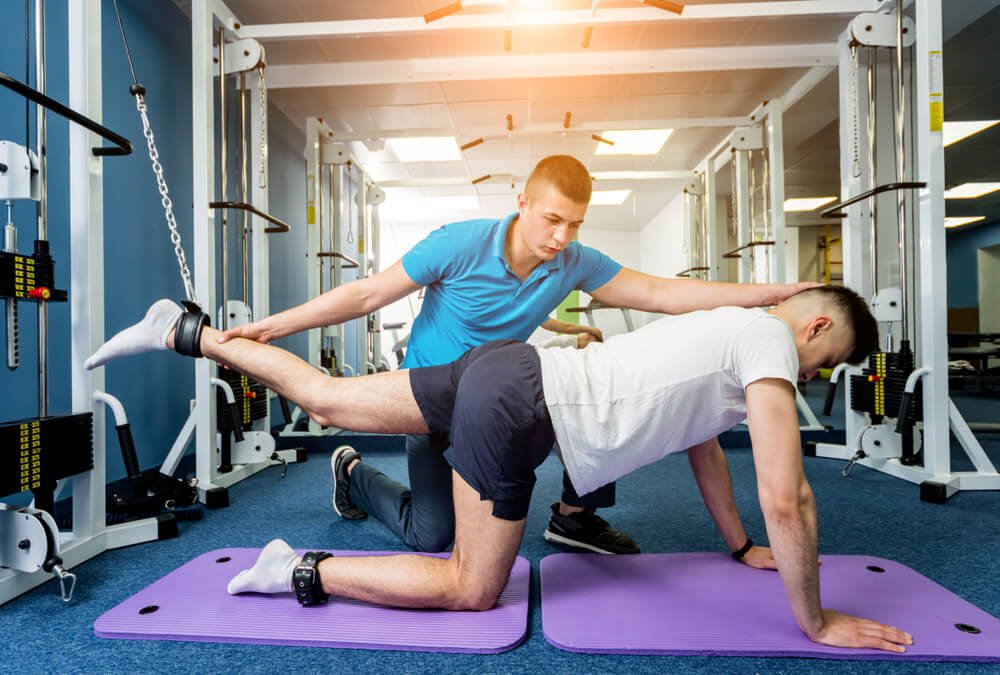
At Sajjad Rehabilitation & Therapy Centre in Patna, we provide structured physiotherapy programs for sports injury rehabilitation. Whether it's a gym injury, cricket or football injury, our goal is to reduce pain, restore movement, and prevent recurrence through performance rehab and re-injury prevention strategies.
Rehabilitation for ACL, PCL, and MCL tears in the knee.
Recovery for hamstring pulls, calf strains, and groin injuries.
Treatment for rotator cuff tears, dislocation, and thrower's shoulder.
Restoring stability and balance after twisting injuries.
Care for tennis elbow, golfer's elbow, and runner's knee.
Structured return-to-sport programs after orthopedic surgery.
Sports injury rehab is not only about pain relief. We find the movement or training problem behind the injury.
Then we protect the injured area, keep you active, and build you up for a safe return to running, gym work, cricket, football, or other sport.
We check weakness, tightness, bad movement, and training load, not only the painful spot.
You may not need full rest. We adjust drills and training so recovery can move forward safely.
You return to running, jumping, and sport drills step by step when the body is ready.
Ignoring minor issues can lead to major setbacks. We address:
Our goal is safe and efficient recovery with a focus on performance. Physiotherapy helps by:
Hands-on mobilization to reduce pain and improve joint movement.
Targeted exercises to rebuild muscle power and endurance.
Balance exercises to improve joint stability and reaction time.
Sport-specific movements like cutting, jumping, and landing.
Support techniques to protect injured areas during activity.
Massage and release techniques to treat tight muscles and scar tissue.
Our sports rehabilitation follows a structured, multi-phase process to ensure a safe and complete return to peak performance.
Evaluation of injury, biomechanics, and movement patterns.
Managing acute symptoms to allow for movement.
Restoring range of motion and basic strength.
Advanced strengthening and sport-specific drills.
Gradual return to full participation with confidence.
When to Start? Immediately after an injury. Early management (R.I.C.E protocol) followed by professional rehab yields the best results.
Get a professional evaluation and a personalized rehabilitation plan.
You should stop the activity that caused the injury at first, but full rest for too long is not always helpful. Safe movement and modified training are often started step by step.
Return depends on pain, swelling, balance, strength, and how well sport-specific movement has recovered. You should not return only by time; the ankle should be stable enough for running, cutting, and landing.
Many people do, especially if pain, swelling, limping, weakness, or repeat injury is still there. Physiotherapy can help restore movement, strength, balance, and confidence before full return to sport.
Not always. Many sports injuries can first be assessed with history and physical examination. Imaging is usually advised when a fracture, major tear, or another serious problem is suspected.
You should return only when pain and swelling are controlled and strength, balance, jumping, running, or change-of-direction tasks are good enough for your sport. Functional testing is often important before return.
Swelling and bruising are common after a sprain or strain, but very large swelling, severe pain, inability to bear weight, numbness, or a body part that looks deformed should be checked urgently.