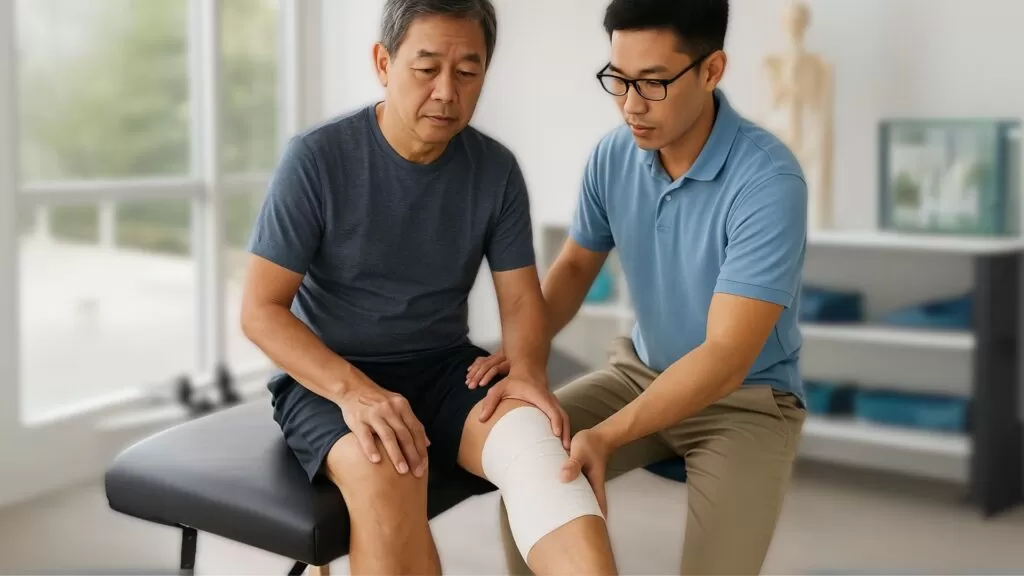
Regaining strength after a long stay in intensive care requires a medically guided approach. We help patients overcome muscle wasting and fatigue through structured rehabilitation.
Significant loss of muscle mass and strength, especially in the legs and arms, due to prolonged immobility.
Difficulty breathing deeply or coughing effectively, often following long-term ventilator support.
Feeling unsteady or dizzy when trying to sit up, stand, or walk after weeks of being bedridden.
Even minor physical tasks can feel exhausting, requiring frequent rest periods throughout the day.
Reduced range of motion in joints like the ankles, knees, and shoulders due to lack of movement.
Requiring assistance for basic self-care tasks like eating, dressing, and moving from bed to chair.
A prolonged stay in the Intensive Care Unit (ICU) often leads to a condition known as ICU-Acquired Weakness (ICUAW). This occurs due to the body's response to severe illness, long-term bed rest, and the use of life-support systems. Post ICU Weakness rehabilitation is essential to help patients transition from the hospital to their daily lives.
At Sajjad Rehabilitation & Therapy Centre, we focus on a gradual, safe, and effective recovery process to help patients regain their physical independence.
Rehabilitation works by re-educating the muscles and the nervous system. Through the principle of neuroplasticity, the brain and body relearn how to coordinate movements that were lost during the period of critical illness.
Guided therapy is crucial because it ensures that the intensity of exercise is matched to the patient's current medical stability. Our focus is on functional improvement—helping you move from the bed to a chair, and eventually back to walking.
Starting rehabilitation as soon as a patient is discharged from the ICU (or even while in the ward) is highly beneficial. Early intervention prevents permanent joint contractures, reduces the risk of blood clots, and helps clear the lungs, significantly shortening the overall recovery time.
Evaluation of muscle power, lung function, and vitals stability.
Setting small, achievable goals for daily mobility.
Moving from bed exercises to sitting, standing, and walking.
Continuous safety checks to ensure the heart and lungs are coping well.
We use a combination of specialized techniques to support recovery:
Family support is vital for patients recovering from critical illness. We provide guidance on:
Recovery from Post ICU Weakness is often a gradual process. The timeline depends on the severity of the initial illness and the duration of the ICU stay. While progress may seem slow initially, consistent therapy leads to measurable improvements in strength and stamina.
Our goal: To help every patient reach their maximum possible potential for independence and return to their normal life.
Get a professional evaluation and a personalized rehabilitation plan.
Our comprehensive neuro rehabilitation centre helps patients regain strength after critical care.
Rehabilitation should start as soon as the patient is medically stable and discharged from the ICU. If you notice persistent muscle weakness, difficulty standing, or shortness of breath after a hospital stay, professional therapy is recommended.
Post-ICU weakness is generalized muscle weakness and functional decline that can happen after severe illness, prolonged bed rest, ventilation, or a long stay in intensive care. It may affect walking, balance, breathing, swallowing, and daily independence.
Rehabilitation should begin as soon as the patient is medically stable and safe to move. Early, step-by-step mobility and strengthening can support recovery and reduce complications from prolonged immobility.
Yes, some patients need breathing exercises, posture training, endurance work, and speech or swallowing assessment after critical illness. Recovery is often better when these issues are identified early instead of waiting for them to settle on their own.
Recovery can take weeks to months depending on the severity of illness, length of ICU stay, age, nutrition, and overall medical condition. Improvement is often gradual, so regular reassessment is important.
Yes, many patients continue rehabilitation at home after discharge if they are medically stable. Home programs may include mobility practice, transfer training, breathing exercises, endurance work, and self-care retraining.
Urgent review is needed for worsening breathlessness, chest pain, fever, repeated falls, sudden confusion, inability to swallow safely, or rapid weakness that is getting worse. These problems need medical attention and should not be handled only through exercise.