Comprehensive recovery programs designed to help stroke survivors regain mobility, balance, and independence. We combine advanced neuro physiotherapy with compassionate care.
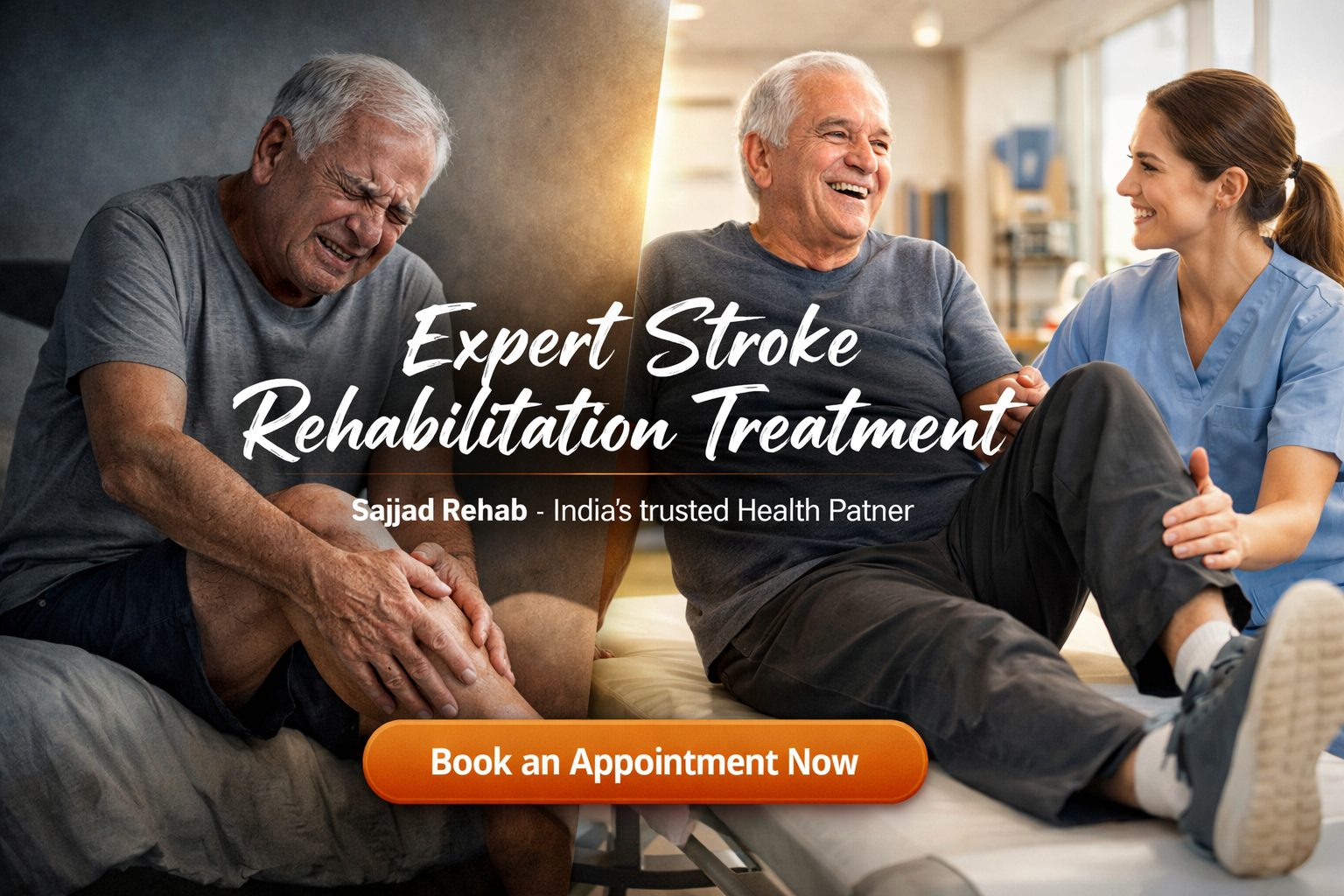
Hemiplegia (paralysis on one side) or hemiparesis (weakness) making movement difficult.
Difficulty in sitting, standing, or walking without support, increasing fall risk.
Stiff or tight muscles that limit range of motion and cause discomfort.
Trouble performing fine motor tasks like holding a spoon or buttoning a shirt.
Aphasia or dysarthria affecting communication and swallowing ability.
Frustration and anxiety due to sudden loss of independence.
A stroke occurs when the blood supply to part of the brain is interrupted, causing brain cells to die. This can affect movement, speech, and balance. Rehabilitation is the most critical part of recovery, helping the brain relearn lost skills through a process called neuroplasticity.
At Sajjad Rehabilitation & Therapy Centre, we focus on functional improvement to help patients return to their daily lives with dignity.
Rehabilitation does not reverse the brain damage caused by stroke, but it helps the healthy parts of the brain take over the functions of the damaged areas. This ability of the brain to rewire itself is called neuroplasticity.
Guided therapy ensures that this rewiring happens correctly, preventing bad habits and maximizing functional recovery.
The first 3 to 6 months after a stroke are often called the "golden period" for recovery. Starting rehabilitation early significantly improves the chances of regaining movement and independence. Delaying therapy can lead to permanent stiffness and muscle wasting.
Start Early RehabDetailed evaluation of muscle tone, reflexes, sensation, and functional ability.
Setting realistic short-term and long-term goals based on the patient's condition.
Customized exercises including neuro physiotherapy, gait training, and hand therapy.
Practicing real-life activities like standing up, walking, and climbing stairs.
Regular progress checks to adjust the treatment plan as the patient improves.
Training family members to assist with exercises and care at home.
We use evidence-based techniques to ensure the best possible outcomes:
Recovery is a team effort. Family support is crucial for a stroke survivor's motivation. We train caregivers on:
Recovery from a stroke varies for every individual. It depends on the severity of the stroke, age, and consistency in rehabilitation. While some patients recover quickly, others may need long-term therapy.
We promise honest guidance. We do not guarantee a 100% cure but commit to helping every patient achieve their maximum possible potential.
Learn more about our comprehensive neuro rehabilitation centre and other specialized recovery services.
Rajesh Kumar
Stroke Recovery
"My father had a severe stroke and his right side was paralyzed. We lost hope, but Dr. Darakhshan gave us confidence. After 3 months of her treatment, my father is now walking with a stick."
Sunita Devi
Hemiplegia Recovery
"After my stroke, I couldn't move my left hand. The therapy team here worked patiently with me. I can now cook and eat on my own. The hand therapy exercises were very effective."
Anil Prasad
Post-Stroke Balance
"Balance was my biggest issue. I used to fall often. The gait training and balance exercises helped me regain my confidence to walk outside without fear."
We are a dedicated stroke rehabilitation centre in Patna, offering professional and ethical care. Our team of trained neuro therapists ensures that every patient receives individual attention and a structured recovery plan.
Serving patients from Patna, Kankarbagh, Rajendra Nagar, and nearby districts like Gaya and Muzaffarpur, we are committed to making high-quality rehabilitation accessible to all.
Get a professional evaluation and a personalized rehabilitation plan.
Stroke rehabilitation usually starts as soon as the patient is medically stable, often within the first 24 to 48 hours in the hospital. Early therapy can help prevent complications and support relearning of movement and daily skills.
Many stroke survivors regain some walking ability with guided rehabilitation, although the level of recovery varies. Walking potential depends on the size and location of the stroke, leg strength, balance, and how consistently therapy is continued.
Yes, many patients improve hand and arm use with repetitive task practice, positioning, stretching, strengthening, and occupational therapy. Recovery is often gradual, and regular practice is important.
If stroke has affected communication, speech clarity, understanding, or swallowing, speech therapy may be needed along with physical rehabilitation. A combined approach is often important for safe recovery and better daily function.
Stroke recovery is different for every person. A lot of progress often happens in the first few months, but improvement can continue for much longer with structured therapy, home exercise, and follow-up review.
Home exercise is important, but most patients benefit from supervised rehabilitation as well, especially early on. Professional guidance helps make sure exercises are safe, specific, and matched to current recovery goals.