At Sajjad Rehabilitation & Therapy Centre, we help children and adults regain independence in daily life through personalized stroke rehab, pediatric OT, hand therapy, and neurological rehabilitation. Our goal-based care supports better function at home, school, and work.
Retraining the brain and muscles to perform daily tasks with the affected side.
Rehabilitation for fractures, tendon repairs, and nerve injuries to restore hand function.
Sensory integration therapy and social skills training for children.
Improving motor control and independence in children with CP.
Cognitive rehabilitation to improve memory, focus, and planning skills.
Training for wheelchair mobility and adaptive techniques for daily living.
Occupational therapy (OT) helps children and adults perform everyday activities safely and independently after illness, injury, or developmental delay.
At Sajjad Rehabilitation & Therapy Centre, our OT team in Patna provides structured, goal-based care for stroke recovery, pediatric development, hand rehabilitation, and neurological conditions affecting daily living skills.
Occupational therapy focuses on the "jobs" of living. For a child, this might be playing or writing. For an adult, it might be working, cooking, or dressing.
We focus on:
Exercises to improve finger dexterity, grip strength, and hand coordination.
Practice of Activities of Daily Living (ADL) like buttoning shirts or holding a spoon.
Therapy to help patients process touch, sound, and movement effectively.
Activities like writing, picking up small objects, and using tools.
Puzzles and tasks to improve memory, attention, and logical thinking.
Teaching patients how to use special tools to make daily tasks easier.
Comprehensive evaluation of physical, sensory, and cognitive abilities to understand specific challenges in daily life.
We identify specific barriers preventing independence, whether they are physical weaknesses, sensory issues, or environmental factors.
A personalized treatment plan is designed with clear, achievable goals tailored to the patient's lifestyle and needs.
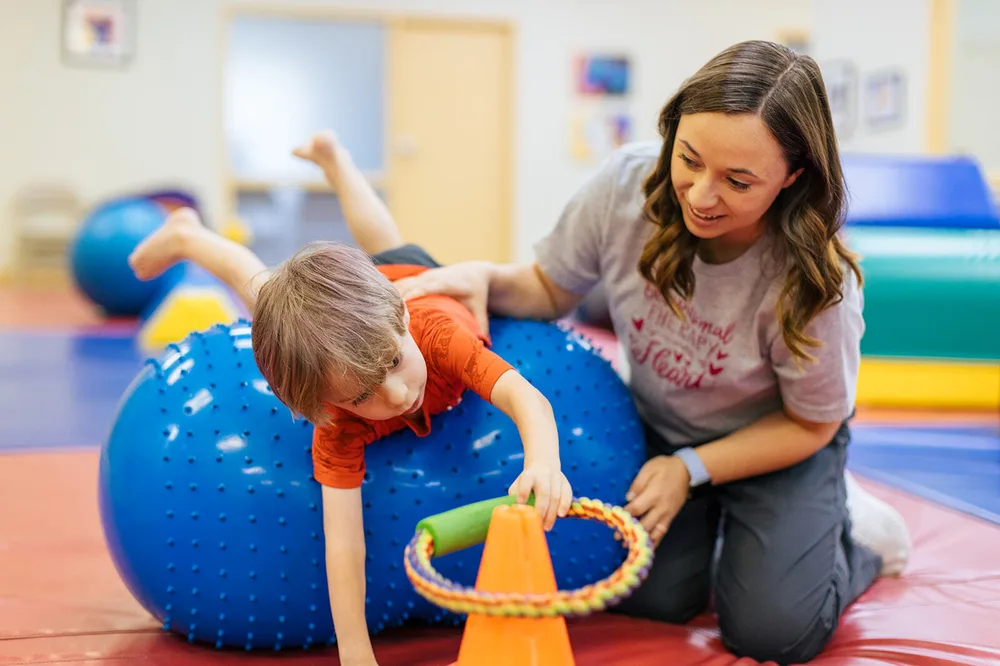
Hands-on therapy sessions focusing on fine motor skills, hand-eye coordination, and adaptive techniques for daily tasks.
Continuous monitoring of progress allows us to adjust the therapy intensity and goals to ensure consistent improvement.
We provide a customized home exercise program and guidance for family members to support recovery outside the clinic.
For children, their "occupation" is playing and learning. Our pediatric occupational therapy helps children with developmental challenges participate fully in school and social situations.
Get a professional evaluation and a personalized occupational therapy plan.
These FAQs are based on common real-world questions people ask in online communities like Reddit and in therapy consultations.
Physiotherapy mainly focuses on movement, strength, balance, and pain. Occupational therapy focuses on using those abilities in real life tasks like dressing, eating, writing, bathing, working, and school activities.
In many conditions, yes. Doing both together can speed functional recovery because physiotherapy improves body function while occupational therapy helps you use that function in daily life.
The first session is usually an assessment. The therapist asks about your daily routine and goals, checks movement and hand function, and then creates a practical therapy plan with home recommendations.
Many people start with 1 to 3 sessions per week. The final frequency depends on diagnosis, severity, goals, and progress between sessions.
Some people notice small changes in a few weeks. Bigger changes in independence usually take a few months of consistent therapy and home practice.
Yes, OT often helps children with self-regulation, attention, transitions, fine motor skills, and daily routines. Progress is usually better when parents are involved and the therapist is the right fit for the child.
Follow a short home plan given by your therapist. Daily practice of 10 to 20 minutes and routine-based activities usually improves carryover and results.
Yes. OT can improve safety and independence in tasks like dressing, bathing, eating, writing, and household activities after stroke or brain injury.